Not sure if therapy is right for you? Many people wait longer than they need to.
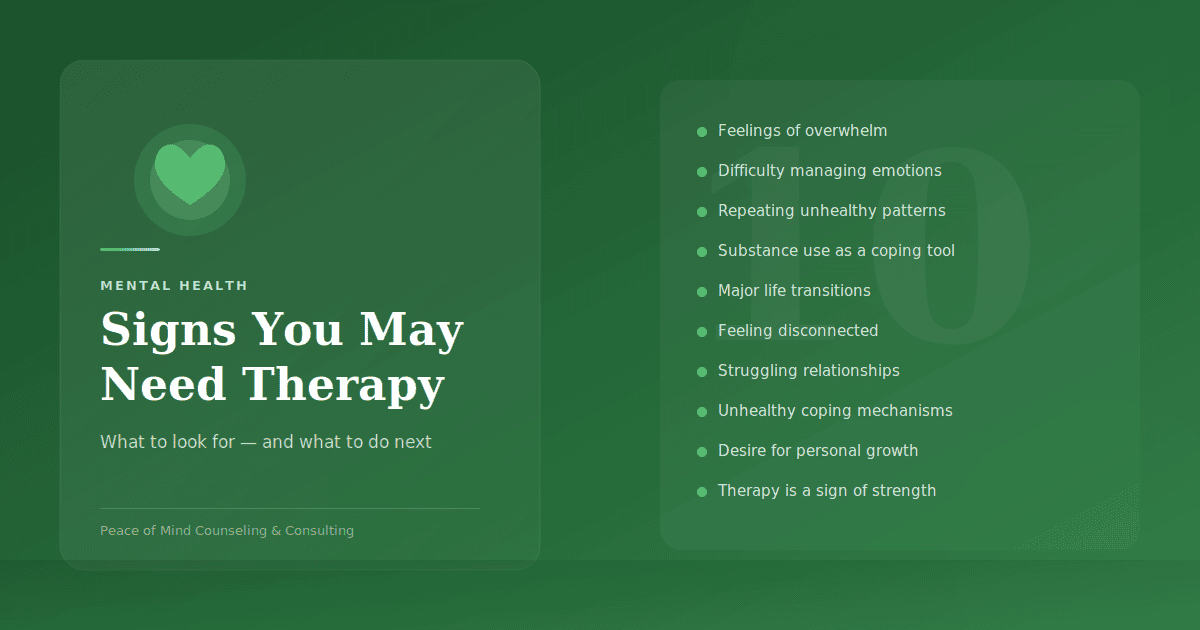
Here are 7 signs it might be time to talk to someone.
1. You Feel Constantly Overwhelmed
When daily tasks that used to feel manageable now seem like insurmountable mountains, it’s often a sign that your nervous system is overloaded. This chronic “survival mode” can lead to burnout, making it difficult to focus, make simple decisions, or find joy in your usual activities. Therapy provides a dedicated space to unpack these stressors and develop sustainable coping strategies to regain a sense of control.
2. Anxiety Is Affecting Your Daily Life
While some stress is a natural part of life, clinical anxiety often manifests as persistent “what-if” thinking, physical tension, or the avoidance of specific places and people. If you find yourself trapped in a loop of worry that dictates your schedule or keeps you up at night, professional support can help. A therapist can offer tools like Cognitive Behavioral Therapy (CBT) to challenge these thought patterns and reduce their power over you.
3. You’re Struggling in Relationships
Whether it’s frequent arguments with a partner, feeling disconnected from friends, or experiencing friction with coworkers, our relational health is a major indicator of overall well-being. Often, these struggles stem from unmet needs or communication styles developed in the past. Therapy allows you to explore these dynamics safely, helping you set healthy boundaries and foster deeper, more meaningful connections.
4. You Feel Stuck or Unmotivated
A lack of direction or a “heavy” feeling of apathy can be just as taxing as high-energy anxiety. When you lose interest in your hobbies or feel like you’re just going through the motions, it may point to underlying depression or a loss of alignment with your values. Working with a counselor helps identify the root of this stagnation and creates a roadmap for rediscovering your purpose and energy.
5. You’ve Experienced Trauma or Loss
Trauma and grief don’t always have a clear “expiration date,” and they can resurface in unexpected ways years after the event. Whether you are dealing with a recent loss or the lingering effects of a difficult past, these experiences change how you view the world and yourself. Therapy offers a compassionate environment to process these events at your own pace, ensuring that your past no longer dictates your future.
6. You’re Having Trouble Managing Emotions
If you find yourself experiencing sudden “mood swings,” intense irritability, or bouts of uncontrollable sadness, your emotions may be signaling a need for deeper attention. Emotional regulation is a skill that many of us weren’t taught growing up. A therapist can help you identify your triggers and teach you how to respond to your feelings with curiosity and calm rather than being overwhelmed by them.
7. You Want Personal Growth
Therapy isn’t only for managing crises; it is also a powerful tool for self-discovery and optimization. Many people seek support because they want to understand themselves better, break old habits, or increase their emotional intelligence. By investing in your mental health, you’re not just “fixing” a problem—you’re proactively building a more resilient, self-aware version of yourself.
If any of these resonate, working with a therapist can help.
For relationship concerns:
👉 https://pomcc.org/couples-counseling-freehold-nj/
If you need help, this article on how to find a therapist is a great resource
Talk to Someone Today
You don’t have to wait until things feel unbearable.