We have all heard the terms stress and burnout. Chances are, you have experienced one — or maybe both — at some point in your life. Between work demands, financial pressures, family responsibilities, and the nonstop pace of everyday life, it is no surprise that so many people are feeling overwhelmed.
The goal of this post is to help you better understand what stress and burnout actually are, how common they have become, what signs to look for, and most importantly, what you can do to manage them before they take a serious toll on your mental and physical health.
Are Stress and Burnout the Same Thing?
The short answer is no.
While people often use the terms interchangeably, stress and burnout are actually very different experiences.
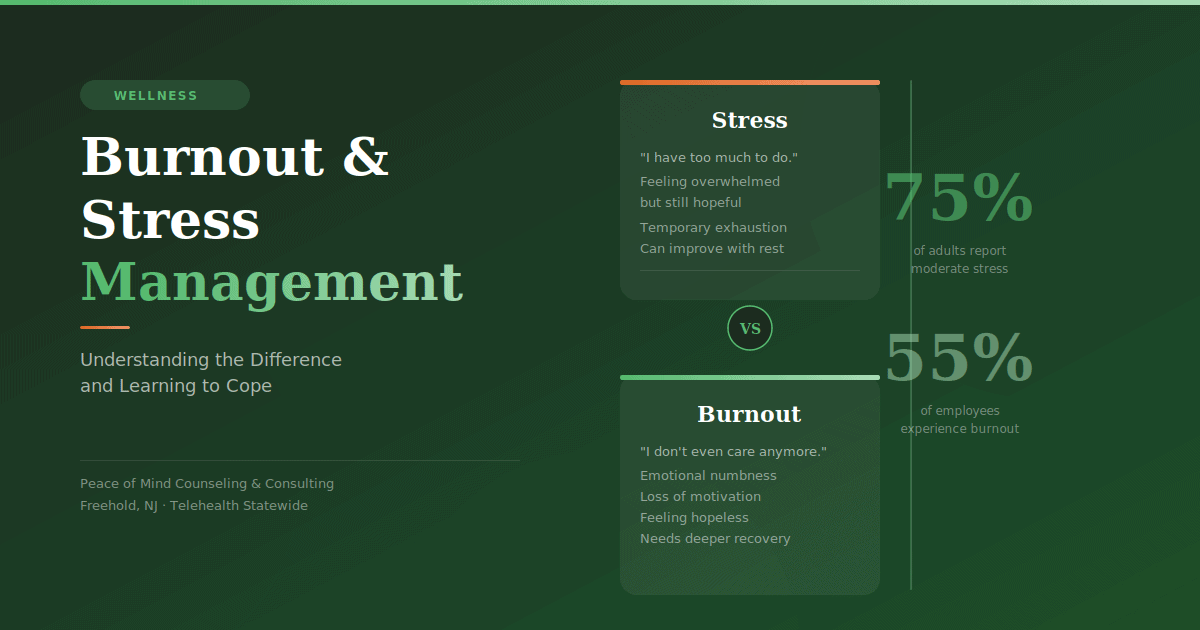
Stress is the feeling of too much. When we are stressed, we often feel overwhelmed, pressured, anxious, or emotionally overloaded. Even though stress can feel exhausting, there is usually still a belief that if we can get things under control, manage our time better, or push through, things will improve.
Burnout, on the other hand, is the feeling of not enough. It is emotional, mental, and physical exhaustion that develops over time, often after prolonged periods of stress. People experiencing burnout frequently feel detached, hopeless, unmotivated, or emotionally numb. Unlike stress, burnout often comes with the belief that no matter how hard you try, things will not get better.
Stress says: “I have too much to do.”
Burnout says: “I do not even care anymore.”
Understanding the difference is important because burnout often requires deeper recovery and support than stress alone.
How Common Are Stress and Burnout?
Unfortunately, both stress and burnout are incredibly common in the United States. Research shows that up to 75% of adults report experiencing moderate levels of stress, while nearly 30% experience severe stress that impacts their physical or mental health. Women and individuals living in high-income countries tend to report higher levels of stress overall.
Burnout is equally widespread, especially in the workplace. Recent surveys suggest that between 55%–75% of employees report experiencing some level of workplace burnout. Younger workers, women, and individuals in leadership or management positions appear to be particularly affected.
The reality is this: if you are struggling with stress or burnout, you are not alone.
Common Causes of Stress and Burnout
Stress and burnout can develop from a variety of life circumstances, and often it is not just one thing causing it. More commonly, it is the buildup of multiple stressors over time. Some of the most common contributors include:
- Financial and economic stress
- Workplace pressures and unrealistic expectations
- Family responsibilities and caregiving
- Personal or family health concerns
- Major life transitions
- Societal and political stress
- Lack of work-life balance
- Feeling unsupported or undervalued
Over time, chronic stress without adequate recovery can lead directly into burnout.
Signs and Symptoms to Watch For
Stress and burnout can impact us physically, emotionally, and behaviorally. One of the biggest warning signs is when you stop feeling like yourself. If you notice several of the following, it may be time to seek support — you can also read our post on signs you may need therapy for more guidance.
Physical Symptoms
- Headaches
- Fatigue or exhaustion
- Gastrointestinal issues
- Muscle tension
- Frequent illness or lowered immunity
- Sleep difficulties
Emotional Symptoms
- Feeling detached or emotionally numb
- Increased anxiety or irritability
- Low self-esteem or self-worth
- Loss of motivation
- Feeling hopeless or cynical
- Decreased enjoyment in activities
Behavioral Symptoms
- Isolation from others
- Increased irritability or frustration
- Difficulty concentrating
- Decreased productivity
- Using unhealthy coping mechanisms such as substance use, overeating, or avoidance
What Can We Do About It?
The good news is that stress and burnout are manageable, and recovery is possible. The key is learning to recognize the signs early and intentionally making changes before things worsen.
Set Healthy Boundaries
One of the most effective ways to reduce stress is learning to create boundaries around work and responsibilities. This can include:
- Setting clear work start and end times
- Avoiding emails or work tasks outside of work hours
- Learning to delegate responsibilities
- Prioritizing tasks realistically
- Saying “no” when your plate is already full
Boundaries are not selfish — they are necessary.
Prioritize Rest and Recovery
Rest is not a luxury. It is part of maintaining your mental health. Recovery time includes sleep, hobbies, relaxation, family time, social connection, and time away from productivity. Aim for 7–9 hours of sleep each night and focus on improving sleep hygiene whenever possible. Your body and mind cannot function well without adequate recovery.
Practice Active Self-Care
Self-care does not have to be complicated or expensive. Simple daily habits can make a significant difference:
- Going for a walk
- Exercising or stretching
- Practicing yoga
- Deep breathing exercises
- Meditation or mindfulness
- Spending time outdoors
- Limiting excessive caffeine or sugar
- Eating balanced meals
Even dedicating 5–10 minutes a day to slowing down and grounding yourself can help regulate stress levels.
Rebuild Support Systems
Stress and burnout often worsen in isolation. Lean on trusted friends, family members, or supportive people in your life. If your support system feels limited, consider ways to build healthier social connections.
And most importantly, seek professional support when needed. If you find yourself struggling to cope, feeling emotionally overwhelmed, or relying on unhealthy coping skills such as alcohol or substance use, working with a licensed therapist can provide support, perspective, and tools to help you recover.
Final Thoughts
Stress and burnout may be common, but that does not make them any less difficult to experience. Checking in with yourself regularly is important. Pay attention to changes in your mood, motivation, energy levels, and emotional well-being. The earlier you recognize the signs, the easier it becomes to make meaningful changes before reaching a breaking point.
You do not have to push through everything alone. If you are ready to take the next step, book a free consultation with one of our licensed therapists. You may also find it helpful to read What to Expect in Your First Therapy Session before getting started.