Recognizing when you might benefit from professional support is one of the most important steps you can take for your mental health. Here are ten signs that therapy may help.
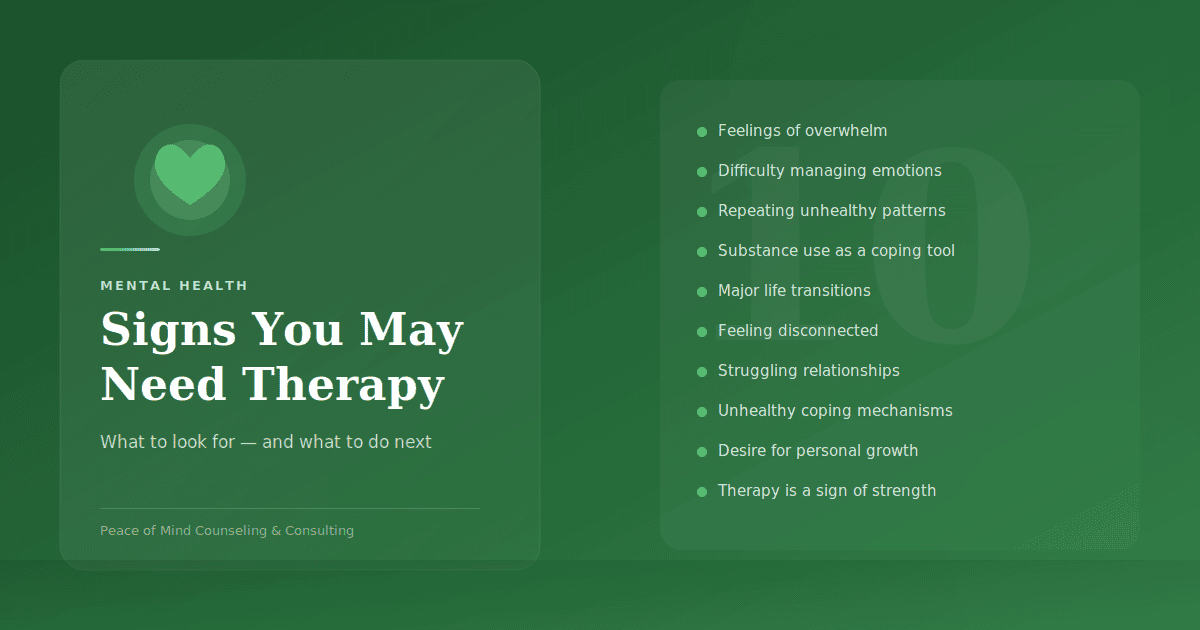
- Feelings of Overwhelm
- Difficulty Managing Emotions
- You Keep Repeating Unhealthy Patterns
- Substance Use as a Coping Mechanism
- Experiencing a Major Life Change
- Feeling Disconnected from Yourself or Others
- Struggling Relationships
- Using Unhealthy Coping Mechanisms
- You Want Personal Growth and Insight
- Therapy Is a Sign of Strength, Not Weakness
Feelings of Overwhelm
Everyone experiences stress, but when stress begins to feel constant or unmanageable, it can affect your sleep, focus, mood, and overall quality of life. If you often feel emotionally exhausted, anxious, or mentally drained, therapy can provide support and practical coping tools.
Difficulty Managing Emotions
Frequent anger, sadness, irritability, numbness, or anxiety may be signs that something deeper needs attention. Therapy offers a safe space to understand emotions instead of suppressing or avoiding them.
You Keep Repeating Unhealthy Patterns
Sometimes we find ourselves stuck in the same repeated cycle, whether in relationships, work, communication, or self-esteem. Therapy can help identify patterns and uncover the underlying beliefs or experiences contributing to them.
Substance Use as a Coping Mechanism
Drug or alcohol use as a means of coping is a sign that help is needed. Talking to a therapist can help you manage the problems driving the use. Learn more about our Substance Use counseling specialty.
Experiencing a Major Life Change
Life transitions can be emotionally challenging, even positive ones. Divorce, grief, job loss, becoming a parent, moving, or relationship difficulties can all create emotional stress that therapy can help process.
Feeling Disconnected from Yourself or Others
You may notice withdrawing from loved ones, losing interest in activities you once enjoyed, or feeling emotionally numb. These experiences can sometimes signal depression, burnout, or unresolved emotional pain. Individual therapy can help you reconnect with yourself and others.
Struggling Relationships
Communication issues, conflict, trust concerns, or difficulty setting boundaries can impact relationships with partners, family, friends, or coworkers. Couples therapy and family therapy can improve communication skills and help strengthen healthier connections.
Using Unhealthy Coping Mechanisms
Overeating, excessive scrolling, substance use, avoidance, emotional shutdown, or overworking can become ways to cope with stress or pain. Therapy can help you develop healthier and more sustainable coping strategies.
You Want Personal Growth and Insight
You do not need a diagnosis or a major problem to benefit from therapy. Many people attend therapy to increase self-awareness, improve confidence, set goals, or create a healthier and more balanced life.
Therapy Is a Sign of Strength, Not Weakness
Seeking therapy does not mean something is “wrong” with you. It means you are taking your emotional health seriously. Asking for support can be one of the healthiest and most courageous decisions a person makes.
If any of these signs resonate with you, we encourage you to take the next step. Book a free consultation with one of our licensed therapists today. You may also find it helpful to read What to Expect in Your First Therapy Session before getting started.